

Fulfill Your Faith Mission with an R-1 Visa

Audio

The R1 Visa for Religious Workers
Fulfill Your Faith Mission with an R-1 Visa
The R-1 visa allows foreign religious workers to live and work in the United States while serving a religious organization. It is a specialized non-immigrant visa designed specifically for ministers and other religious workers whose roles do not fit traditional employment-based visa categories.
At the Law Offices of Chris M. Ingram, we assist religious organizations and individuals of all faiths in navigating the R-1 visa process, from eligibility analysis to USCIS approval.
Serve Your Calling in the United States
The R-1 religious workers visa exists to support the unique staffing needs of U.S. religious institutions. Many faith-based roles, such as ministers, missionaries, theology instructors, or religious counselors, cannot be sponsored under standard work visas like the H-1B.
The R-1 visa provides a lawful pathway for religious workers to:
- Enter the United States
- Perform qualifying religious duties
- Remain in the U.S. for extended periods while serving their faith community
This visa applies broadly across denominations and belief systems, as long as the organization and the role meet USCIS requirements.
What Is the R-1 Visa?
The R-1 visa is a non-immigrant visa for religious workers coming to the United States temporarily to work in a religious capacity.
It is available to:
- Ministers of religion
- Religious professionals
- Other religious workers engaged in qualifying religious occupations or vocations
The sponsoring organization must be a U.S. nonprofit religious organization or an affiliated nonprofit entity.
You can learn more about employment-based visa alternatives, such as the EB-1 green card or O-1 visa, if your background extends beyond religious work.
R-1 Visa Requirements
To qualify for an R-1 visa, the applicant must meet all of the following requirements:
- Be a member of a religious denomination for at least two years immediately preceding the application
- Have a bona fide offer of employment from a U.S. nonprofit religious organization
- Intend to work solely in a qualifying religious capacity
- Meet the definition of a minister, religious professional, or other religious worker
USCIS evaluates both the individual’s background and the religious organization’s legitimacy during the adjudication process.
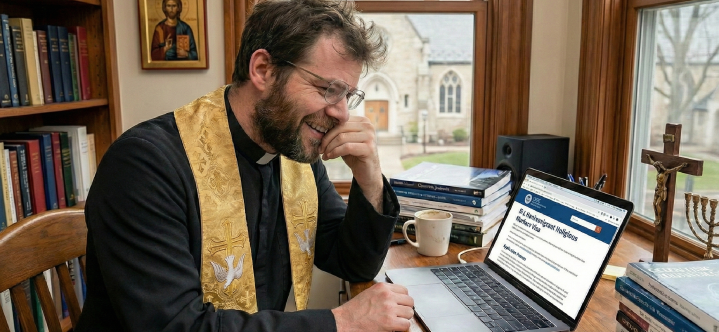
The Three R-1 Visa Classifications
Ministers of Religion
Ministers are individuals who are:
- Ordained or authorized by their denomination
- Qualified to conduct religious worship
- Performing duties normally performed by clergy
Examples include priests, pastors, rabbis, imams, or other formally recognized clergy.
Only ministers may later qualify to apply for a Special Immigrant Religious Worker green card while remaining in the United States.
Religious Professionals
Religious professionals are:
- Members of a religious denomination
- Employed in religious occupations requiring at least a bachelor’s degree or equivalent
- Working in roles such as theology professors, religious counselors, or nurses in faith-based clinics
The position must relate directly to the religious mission of the organization.
Other Religious Workers
This category includes individuals such as:
- Missionaries
- Translators
- Members of religious orders
- Workers in religious vocations
A formal degree is not required, but the work must still qualify under USCIS religious standards.
Religious Occupation vs. Religious Vocation
Understanding this distinction is critical.
Religious Occupation
A religious occupation involves duties that:
- Directly advance the religion’s creed or beliefs
- Are inherently religious in nature
Examples include religious translators or instructors.
Administrative or clerical work does not qualify.
Religious Vocation
A religious vocation reflects:
- A lifelong commitment to religious life
- Formal vows or comparable evidence of devotion
In these cases, USCIS focuses on the applicant’s continuous religious commitment, rather than whether the job directly advances the creed.
R-1 Visa Duration and Family Benefits
The R-1 visa is initially granted for up to 30 months and may be extended once, for a total maximum stay of five years.
Spouses and unmarried children under 21 may accompany the R-1 worker on R-2 visas, allowing families to remain together in the United States for the same duration.
More details on dependent visas can be found on the official USCIS R-1 Visa page.
Navigating the R-1 Visa Process
While USCIS recognizes all bona fide religions, the R-1 visa process can still be complex. Applications are carefully reviewed to confirm:
- The legitimacy of the religious organization
- The authenticity of the offered position
- The applicant’s qualifications and religious history
Our office guides both organizations and applicants through each step, ensuring compliance and avoiding common pitfalls that lead to delays or denials.
Start Your R-1 Visa Journey Today
If you are a religious worker or a U.S. religious organization seeking to sponsor one, the R-1 visa may be the right solution.
Contact the Law Offices of Chris M. Ingram for a free consultation to assess eligibility, understand timelines, and explore long-term immigration options connected to religious service.
Let us help you bring your faith-based mission to life in the United States.
Comments on this entry are closed.